


Pearl Plants Trees Across the Watershed
Pearl had a busy month in April! Two weeks of tree planting kept Pearl occupied across the watershed.
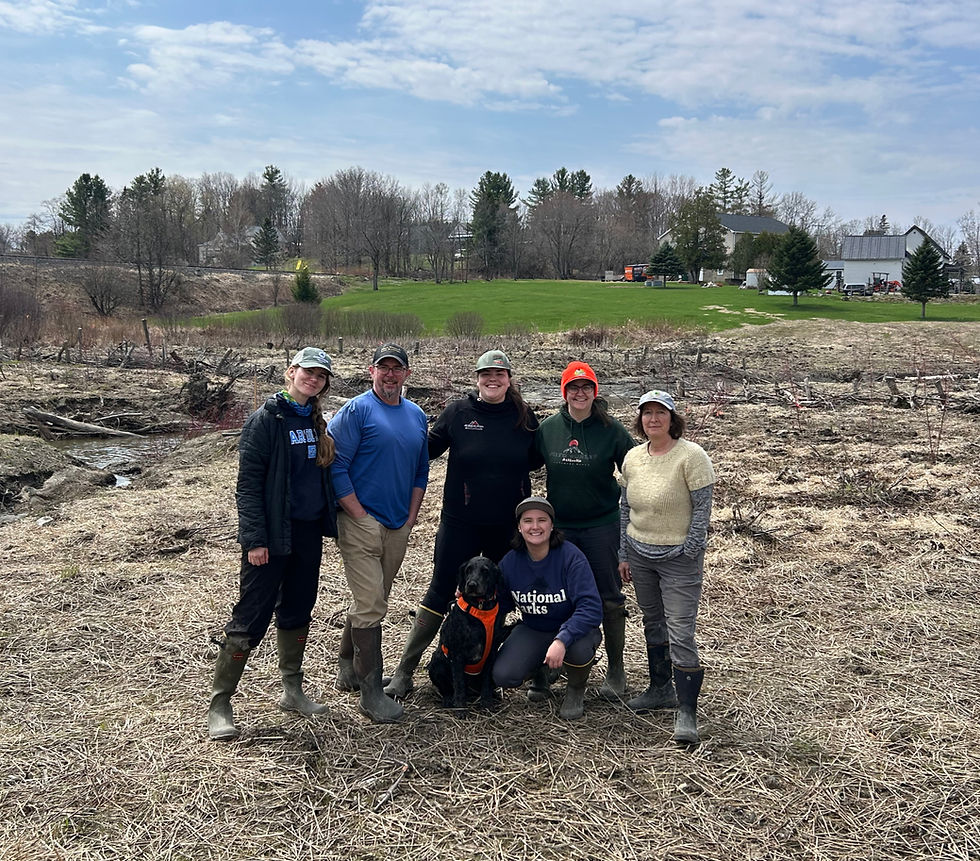
For those that do not know, tree planting season is an absolute favorite of Pearl's. Running
around in a field all day, sticking your nose into freshly dug holes, swimming in the river, it truly does not get better than that for Pearl. Tree planting also kicks off MRBA's field season. It can only go up from there for our furry friend!
Follow along as Pearl tells you all about who, what, where, when and why of this seasons tree plantings.
The Missisquoi River Basin Association has been planting trees since the organization formed in 1996. Over the past 30 years, the MRBA has planted well over 35,000 trees all across the Missisquoi Watershed to create Riparian buffers.
Riparian buffers are strips of vegetation such as trees, shrubs or grass planted next to rivers, streams or other waterbodies. By planting vegetation along streams, space is created between the water and upland land uses, which helps protect the water quality and stream habitat while also creating wildlife habitat.
This year was a record breaking tree planting season. MRBA staff, board members, local volunteers, school group CatRock Adventures from New York City, and local Newport Town and North Country Union school students planted 1338 stems at sites in Richford, North Troy, and Newport Center along the Missisquoi River and tributaries. 900 trees were also planted at our nursery in beds to be used for future tree plantings! In total, 2,238 trees were planted.
Now, Pearl is going to take a closer look at what went on at each of the planting sites.
To start the tree planting season off, MRBA staff Sarah, Ruby, and Natalie, plus Pearl did a small 78 stem planting at a private home in Richford. We found this tree planting site last summer when conducting a Stream Wise assessment on this property. This is a free program for land owners in the Upper Missisquoi Watershed with streams on their

property. During a Stream Wise site assessment, a MRBA Staff member will walk your stream or river during a site visit and give an overview of the perceived health of the water, the surrounding landscape, and provide recommendations of land management practices that protect water quality
Although this was a small planting, it marks an important moment for the MRBA. Some of the trees used on this site came from the foundational bed at our native plant nursery. Planted two years ago, these trees will now have the chance to grow into a strong buffer.
In a large old farm field in North Troy, 660 trees were planted!
Our board president John as well as board members Wendy, Dany, and some awesome community volunteers got their hands dirty! Species planted include red osier dogwood, speckled alder, chokberry, nannyberry, and tamarack.
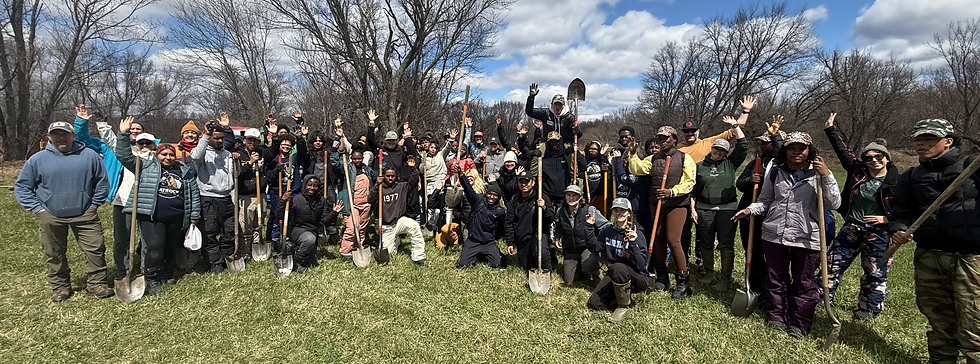
At this site, we were joined by school group CatRock Adventures from New York City. This is a non profit community-based organization whose goal is to reach, inspire, and empower the next generation of environmental, community, and business leaders from underserved communities.
The MRBA has been planting trees with CatRock when they come to Jay Peak for their school April break for many years. It is a great partnership that we continue to foster.
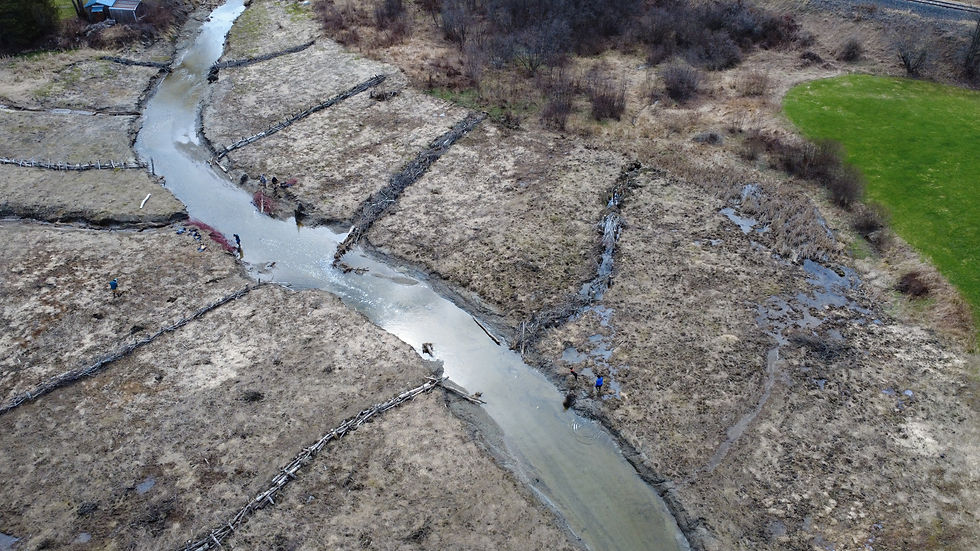
Last fall, the MRBA removed a non functioning man made dam in Newport Center located on Mud Creek. This will improve water quality in Mud Creek, encourage wildlife habitat, and eliminate the risk of the dam failing. Additional benefits of this project were removal of invasive plants (stands of phragmites), and construction of beaver dam analogs, that have helped to slow water flow and restore the creek’s curves. Since removing the dam, the stream channel is already returning to its natural state.
To continue the restoration work being done on this site, 600 trees were planted. Species included red osier dogwood and willows. We had two special groups join us!
One day, we were joined by the 4th, 5th, and 6th grade students and teachers from Newport Town School. Another day, we were joined by the National Honors Society students from North Country Union High School. Both groups of students helped us plant trees and clean up the site. These trees will help hold the river bank in place, filter out pollutants, and provide habitat to wildlife.
Thank you to the students for being a huge help at this project location!
MRBA staff and volunteers planted a total of 900 trees in nursery beds at our native tree nursery Ironwood, located in Jay. The species planted include hackberry, swamp white oak, American elm, and tamarack. Different than our usual riparian buffer plantings, these trees will stay in these beds for about two years to grow and will then be harvested for future riparian buffer plantings, much like what was done at the Richford planting.
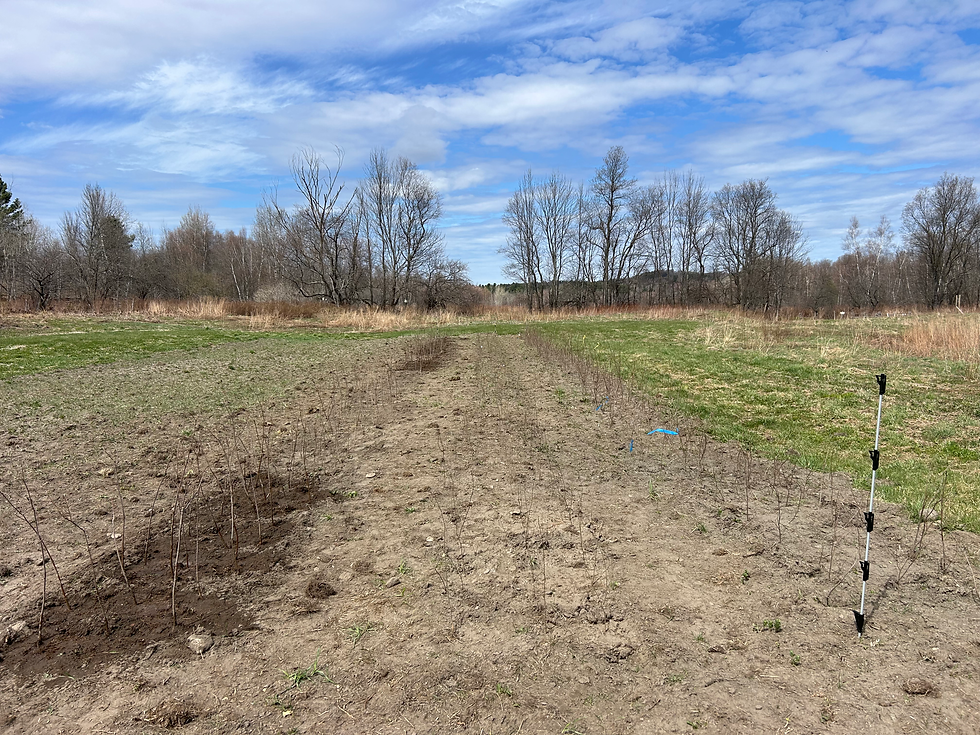
The planting technique also differs when planting in nursery beds. Our Nursery Manager Aaron and Project Manager Ellen taught the dibble bar method. This is a fast, efficient method for planting bare root trees, allowing tree planters to use a specialized tool (or the back of a shovel) to create narrow, deep slits in the soil where the trees are planted.
To plant these trees in beds, 100 feet in length was measured out and every one foot, three trees were planted across. This led to 300 trees being planted in each bed. This process was repeated for all three beds that were planted.
We are looking forward to watching these trees grow and harvest in the future!
Pearl wants to extend a big thank you to all those who came out and planted trees with us as not only will it help the watershed, but it also provided a lot of holes for Pearl to stick her nose in. We already can't wait for next seasons planting!
Want to see more photos from tree planting? Follow our Facebook and Instagram account @mrbavt


