Pearl Finds Out Where Snow Goes in the Winter
- Mar 9
- 3 min read
Updated: Mar 11
In Vermont in the winter, it snows quite a bit. This winter in particular has been bitterly cold and snowy. Pearl knows that snow falls from the sky when atmospheric water vapor freezes directly into ice crystals within cold clouds which then form, grow, and fall due to gravity. What Pearl does not know is where snow goes after that. Follow along as Pearl finds out where snow goes in the winter.
The Missisquoi Watershed has some of the snowiest spots in all of the state with Jay Peak, Montgomery, Enosburgh, and Newport regularly reporting some of the states highest snowfalls. Jay Peak averages around 300 inches of snowfall per year. January and March are on average, the snowiest months in Vermont. There are plenty of snowy months to go around!

The Missisquoi River starts in Lowell, is fed from mountainous headwaters, and empties out in Missisquoi Bay in Swanton. This water then enter Lake Champlain where it eventually leads to The Saint Lawrence River, and then on to the Atlantic Ocean. That is a far journey for all of that water to travel!
All of the water on Earth is connected through the hydrologic cycle. Evaporation, transpiration, condensation, precipitation, and runoff constantly move water between the oceans, atmosphere, land, and back again, linking freshwater to saltwater.
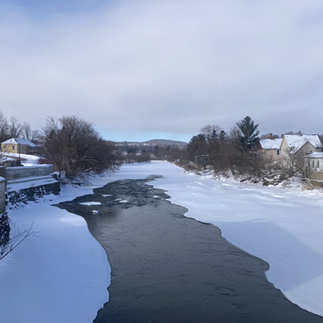
So, how does this all relate to snow? When snow falls in the Missisquoi Watershed the snow falls on structures, land, and the river and its tributaries. Snow typically begins to melt when the temperature is at or above 32∘F. It is possible for melting to occur below freezing due to sun, wind, and ground heat. When the snow melts, it turns in to liquid water and enters into rivers, streams, and storm drains. Some of the snow also evaporates directly into water vapor. The water vapor enters the atmosphere and will eventually turn into rain or snow.
Climate change is having a large impact on both snow and snowmelt. Climate change reduces global snowpack, causing earlier spring melts, and reducing the total number of days with snow cover, with over 60% of US locations receiving less snow than in the 1970s. While warmer air holds more moisture, leading to intense, heavy snowstorms in some areas, it often results in more rain than snow, shrinking glaciers and disrupting water supplies. As the atmosphere warms, it becomes capable of holding more moisture, and that moisture can then fall dramatically in the form of rain, sleet or snow

When there is a sudden increase in temperatures, snow melts quickly and causes water levels to rise. In the Missisquoi, snow melts on Jay Peak and the surrounding towns and enters the river at an accelerated rate. This leads to flooding of the river. Flooding damages infrastructure, homes, businesses, and the environment.
The term spring melt refers to the time of year (typically in spring) is a critical, often rapid phase of the annual water cycle driven by rising temperatures, high sun angles, and warm rain, which can lead to significant flooding if it occurs too quickly. It replenishes water supplies but rapid melting also poses risks for landslides, debris flows, and sudden river surges.
To read more on spring flooding, check out a previous Pearl's Corner Blog Post that covered the topic.
Now a days, it is not uncommon to have an unseasonably warm day in late February or early March that melts snow, causes rivers to rise and flood, and then winter continues to last another month or so. Typically, spring snowmelt in Vermont occurs near the end of March. However, climate change continues to make this unpredictable and every changing.
Pearl encourages all of her readers to stay safe in winter, especially by waterways and to keep an eye on the changes in temperature. We are all in this together!