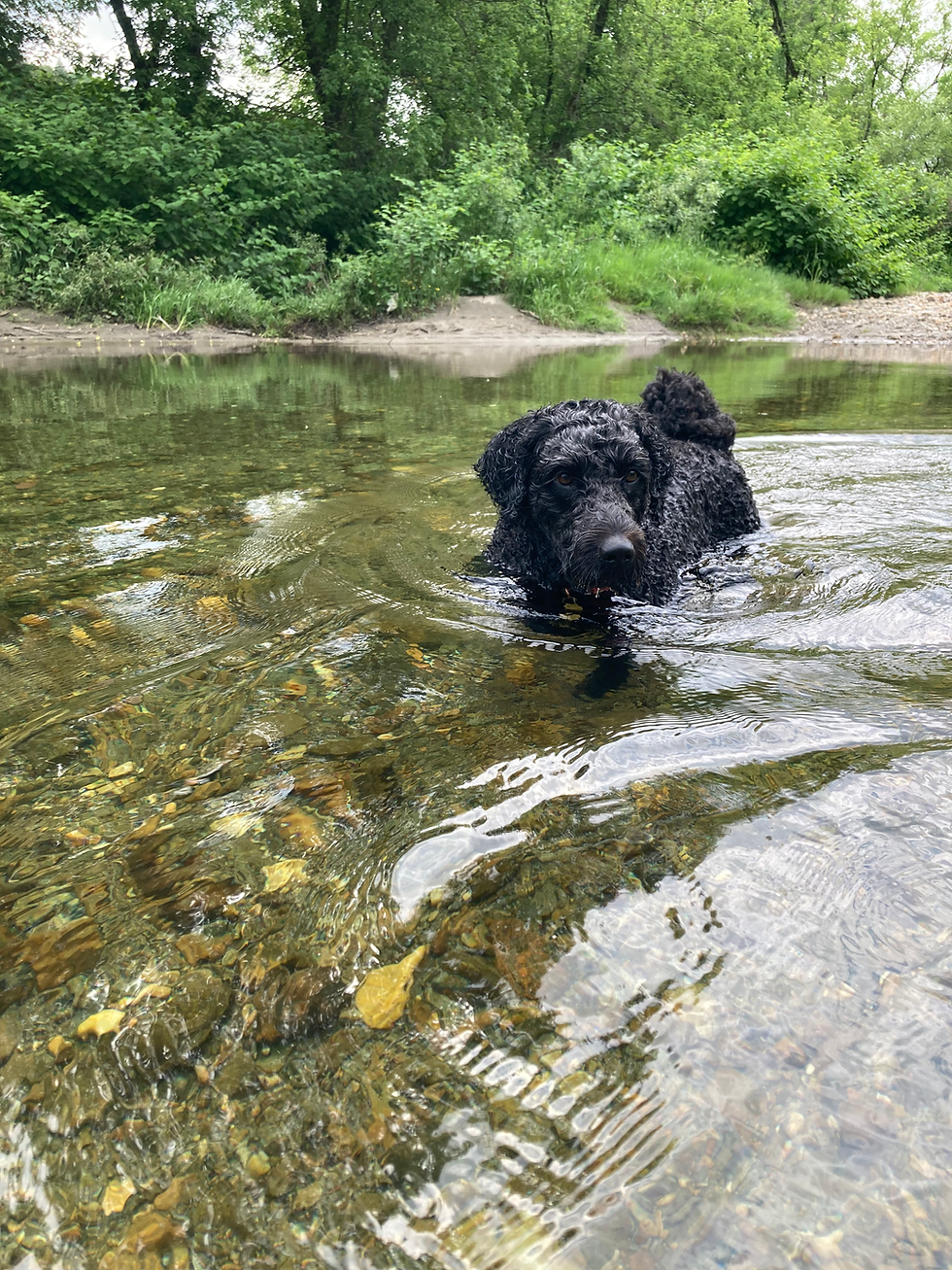
Pearl Learns About Watershed Education
Here at the Missisquoi River Basin Association, education is an important piece of our puzzle as we work to restore and maintain the ecological integrity of the Missisquoi River system.
Every year, the MRBA offers educational sessions to local schools and organizations throughout the Missisquoi Watershed to engage and train responsible watershed stewards from an early age. Some of our current educational programs include Bug Works, What is a Watershed, Rainfall Simulator, and River Day. Each of our educational offerings allows students to interact with and deepen their understanding of the watershed and landscape around them.
We are constantly looking for opportunities to increase our own knowledge, catalogue, and ways of teaching students. A fantastic opportunity to do exactly that came up recently and we are thrilled we got to be a part of it.
At the beginning of August, one of our AmeriCorps members and Watershed Engagement Coordinator Ruby Bratcher spent the week attending one of North Branch Nature Center’s Educator Institute classes, focusing on rivers and watersheds.
Educational programming is one of the few things at the MRBA that Pearl does not participate in. This is mainly due to the fact that she is a dog. However, she appreciates her coworkers that are out there doing the work! After her class, Pearl sat down with Ruby to get all the details.
Follow along in this blog post as Pearl tells you all about how Ruby spent her week, broken down day by day at teacher summer camp!
Day One: Overview and Introduction of Rivers & Watersheds
For the first day of class, Ruby arrived at North Branch Nature Center (NBNC), located in Montpelier. They have a beautiful property located on the East Branch of the Winooski River with a nature summer camp, nursery, trails around the grounds, and much more.
Ruby was in a room with eight other educators plus the course instructor, NBNC's Program Director, Sean Beckett. This would be the crew for the week!
The day started with introductions, questions you hope to get answered by the end of the week, and personal goals for the course. A presentation was given to understand the topics and terms that were going to be covered in the class and handouts were looked over.
The group then went outside to check out the river. The East Branch of the Winooski Rivers provides a great space to look at river dynamics and practice some of the terms and concepts learned earlier in the classroom.
Ruby learned early on that this will be a hands-on, immersive class!
After spending time in the river (and getting rained on), it was time to move on and check out the stream table. A stream table is an educational tool that is a physical model of a river used to simulate and demonstrate water erosion, deposition, sedimentation, and more in real time. As the week went on and new topics were introduced, the educators would return to the stream table to model what they were learning.
It was a great first day and Ruby was excited to come back for day two!
Day Two: Forest Hydrology
Day two of class started in Stowe with guest speaker Beverley Wemple from University of Vermont. The focus of today was about forest hydrology, the movement, distribution, and quality of water within forest dominated ecosystems and watersheds.
The first activity of the day was using a homemade watershed model to show how rain falls across different landscapes. Trees really make a difference and human made structures have a large impact!
Next, the crew headed into the woods to see a weather monitoring station. After that, it was time to get into the stream to try out estimating stream flow discharge at a stream cross section. Two teams were created and a flowmeter device was used to measure the velocity of water. A little bit of repetition and some math calculations later and the teams had a number they could compare with the USGS river gauge. It felt like being back in school doing a lab!
Before heading out of the woods, the class took nets to the stream to catch and identify macroinvertebrates. This activity would be revisited later in the week.
Ruby loves meeting new people, hearing new ideas, and being in new places and streams. It was the perfect mix of things to do on a beautiful day. It was nice for Ruby to be in the woods and have her feet in a cold stream today because it kept her nice and cool on a warm day!
Day Three: Beavers
Day three may have been Ruby’s favorite day from this week of fun and learning! It began at NBNC in the classroom with a presentation on beavers. During this presentation, Ruby volunteered to dress up as a beaver for the class, modeling each trait and adaptation of the species. Enjoy the image below of beaver Ruby.
The group went outside to use the stream table to model beaver dams and how that impacts the ecosystem. Ruby enjoyed getting to use the stream table to reflect and build upon learnings.
The class then packed up and went down the road to visit a series of beaver ponds. It was interesting for Ruby to see so many beaver ponds in one place and determine as a group if the ponds were active or not and how long they had been there. You can learn a lot just by observing the landscape around you!
Beavers are amazing creatures. That was the main takeaway from this day.
Day Four: Flooding & Human Alterations of Rivers
Day four of this course had a topic of flooding and human alterations of rivers. The Montpelier area was devastated by 2023 and 2024 floods in Vermont. The class started the day in Plainfield in the Great Brook Watershed to see some of this devastation first hand.
A guest speaker, George, familiar with the area showed how the flooding ate away at river banks, moved large boulders, and washed a house away. Further up the road, Ruby and her classmates saw a site where the road washes out during large storms, heavily impacting the river and surrounding communities.
The next stop was back in Montpelier to look at a stream heavily impacted by the 2023 floods. A high volume of water came through, taking down trees, moving sediment, and changing the flow of the stream.
Once back at NBNC, Ruby and her classmates went to the stream table to model human alterations of rivers and how that affects flooding.
Water is a powerful force and not something to be messed with.
Day Five: Paddle & Macroinvertebrates
The fifth and final day of the class was all about being in and on the water. All week Ruby had been looking forward to getting in the canoe and going for a paddle.
The goal of the day was to paddle the Wrightsville Reservoir and return to the topic of macroinvertebrates. First, the class stopped at the top of the Wrightsville Dam to learn about the history of the dam and how it held back water in the 2023 and 2024 floods. Before leaving, the group saw a bald eagle!
Next, everyone loaded into boats and started the paddle, stopping as they went on to note changes in the ecosystem and any cool birds or plants. Once reaching the end of the reservoir, the group reflected on the paddle over lunch and got ready to look for macroinvertebrates.
Using different types of nets and buddying up, the educators spent time moving rocks and kicking up sediment in the weather to gather the macros. After placing the findings in ice cube trays, ID guides were used to identify the species and determine the overall health of the water.
It was then time to paddle back to the start and head back to NBNC to wrap up the course.
The group went around the room and reflected on the week and how to use what they learned going forward. Ruby is certainly feeling excited to spread her knowledge throughout the watershed!
Ruby is extremely grateful to have had this experience. It was a fantastic way to spend a week!
If you are an educator in the Missisquoi Watershed and would like to partner with the MRBA on educational programming, please contact info@mrbavt.com
Throughout this conversation, Pearl has certainly gained new ideas for future blog posts! She also looks forward to hearing about all the fun and learning opportunities to come!
a few more photos to enjoy :)