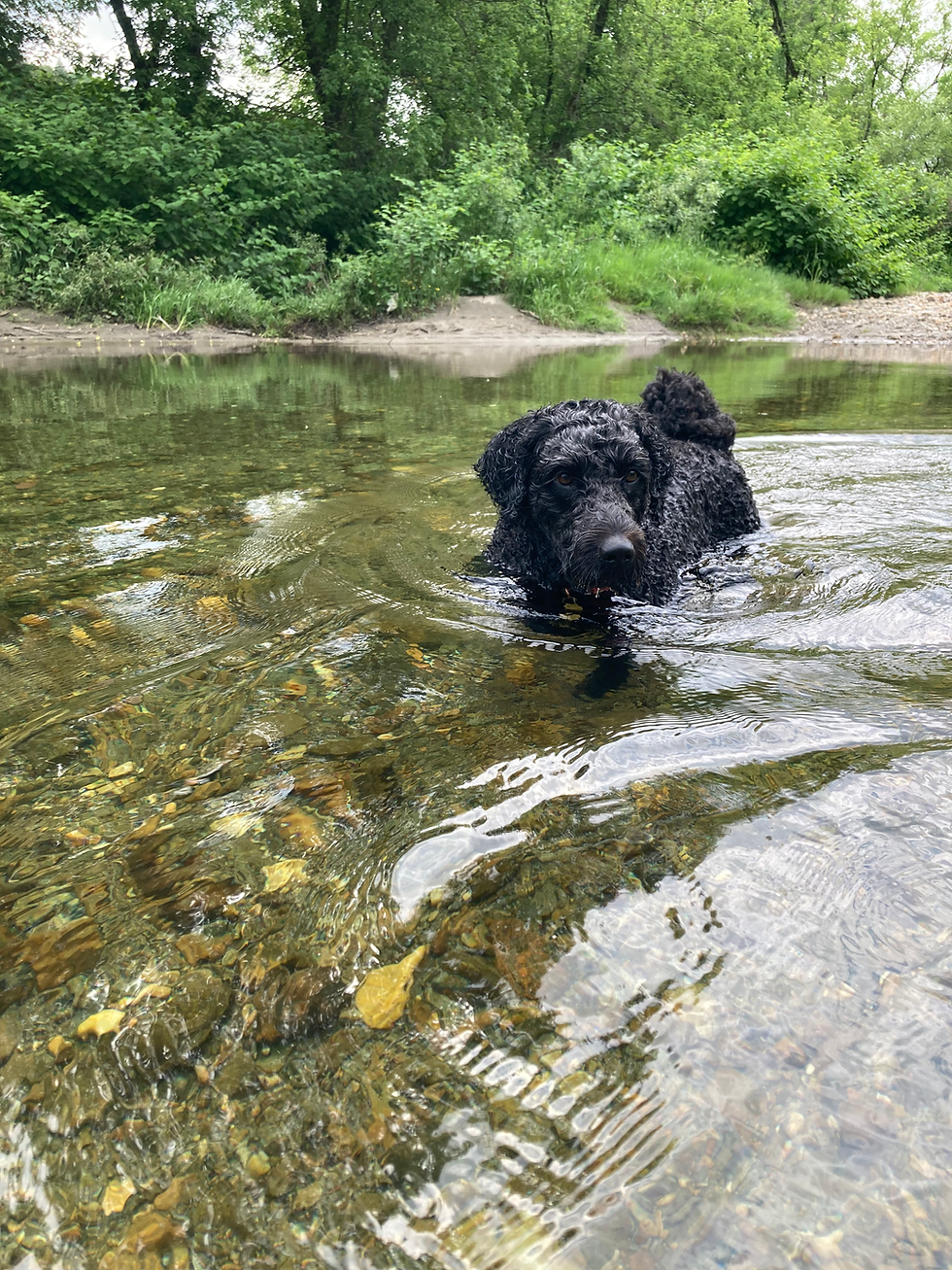
Pearl Maintains a Rain Garden
Over the past several years, the Missisquoi River Basin Association is proud to have constructed three rain gardens across the Missisquoi watershed.
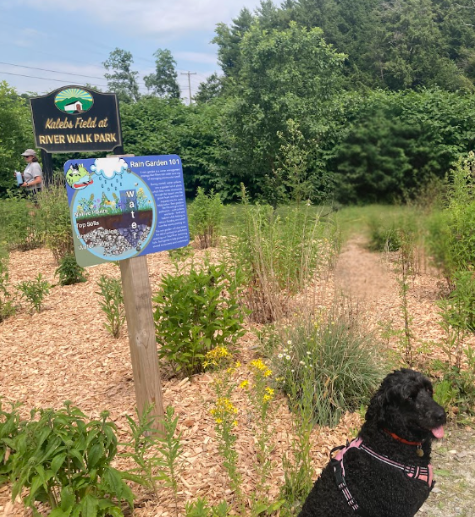
A Rain Garden is a small, bowl-shaped depression in the soil made up of native plants used as a drainage capture from runoff. Rain Gardens are typically planted on the downside slope of an impervious surface. This type of landscaping allows runoff from impervious surfaces, or extremely saturated landscapes, to collect and infiltrate into our water table. They also create a natural landscape for residential or commercial properties; creating a wonderful habitat for pollinators, birds, butterflies, and other beneficial insects.
The first rain garden, planted in June of 2020 by MRBA staff, our AmeriCorps member at the time Ranier Lucas, and interns is located at the Jay/ Westfield Elementary School. This rain garden is an edible garden, meaning it contains native, consumable, and perennial herbs that germinate throughout the season. Plants that can be found in this rain garden include raspberry, calendula, rosemary, Shasta daisy, and apple mint. MRBA staff visits this location during the summers to weed and track progress of the plants.
The second garden, planted in November 2021 is located at Richford Elementary School. The Richford rain garden is another edible garden created by the MRBA staff and our AmeriCorps member at the time (now Project Manager Sarah Lunn). Plants that can be found in this rain garden include lavender, garlic chives, oregano, mint, and blueberry. During the planting of this rain garden, willow stakes were woven into the foundation for structure and wool pellets placed for moisture retention and weed control. Pearl is happy to share that the willow stakes and wool pellets have performed extremely well and we are interested in implementing that design again in future rain gardens.
Finally, the third MRBA rain garden, planted in July of 2024 is located at Riverwalk Park in Montgomery. The newest rain garden created by MRBA staff and Leap interns is a pollinator rain garden. Pollinator rain gardens have native perennial flowers that germinate early, mid, and late season alongside native grasses. Some plants found here include beebalm, coneflower, verbena, sneezeweed, and goldenrod. We are enjoying getting to track the progress of this rain garden!
Click on the images below to see which MRBA rain garden it is!
Jay/Westfield Rain Garden Richford Rain Garden Riverwalk Park Rain Garden
These rain gardens, created with native plants, are beneficial to the ecosystem as they improve water quality, conserve water, reduce erosion and flooding, and create habitat- among many other things.
Although Pearl was not around for the planning and designing of all the gardens, she has certainly visited them all several times and has had the opportunity to conduct maintenance on them all as well.
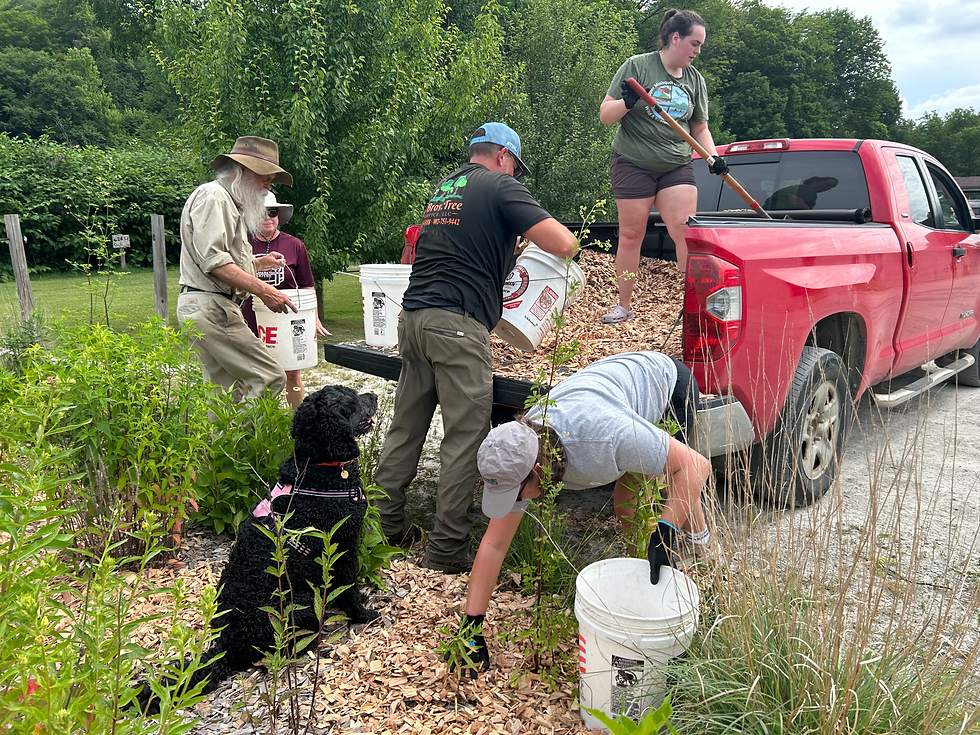
Recently, on a hot morning in July, Pearl and the MRBA staff along with rockstar community members met at the rain garden in Riverwalk Park in Montgomery to weed and mulch the rain garden as well as learn about how to make one of our own.
It is true what they say about many hands making light work. In just 45 minutes, Pearl and the crew were able to weed and mulch the entire garden! Plus, there was time after to enjoy a cold seltzer and a dip in the Trout River.
Weeding and mulching a garden stops the weeds from stealing water and keeps the soil moist and healthy. Caring for a rain garden takes the most work in the first two to three years while plants grow deep roots. After that, maintenance becomes much easier.

At the MRBA, we visit our rain gardens several times a season to check on their progress and conduct annual maintenance. Now that the weeds are gone and a fresh layer of mulch has been added to the top of this garden, it will be all set for the season! All that is left to do now is sit back and enjoy the native plants along with the pollinators.

Pearl would like to thank the community members who took time out of their day to spend conducting maintenance with us and getting to learn about why rain gardens are important!
If you would like to learn more about the MRBA’s rain garden’s visit https://www.mrbavt.com/rain-gardens
Contact info@mrbavt.com if you know of spots in the watershed that would benefit from a rain garden.
Be sure to follow @MRBA on Facebook and Instagram to see Pearl maintain more rain gardens!